The dentist, one step at a time
A bright light, a chair that tips back, and someone with their hands in your mouth. This walks through what happens, how it might feel, and what your child can actually do about it.
- Autistic children
- Children with ADHD
- Children with speech delay
- Any child who finds the dentist's chair, light or tools hard
Make this about my child
The free version below works as it is. Adding a name, choosing the child in the pictures and saying what happens afterwards changes what your child sees.
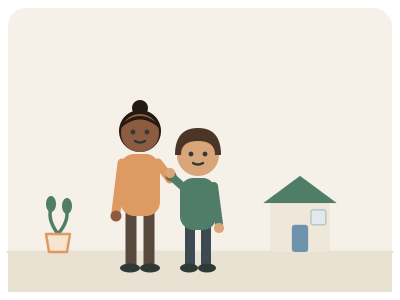
A child is going to the dentist.
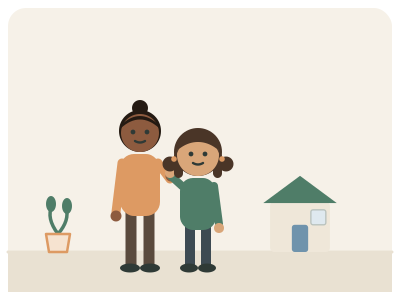
Maya is going to the dentist.
Example, using the name Maya
Step 1 of 7
What is happening?
I am going to the dentist.
Get the free Dentist pack
The printable version: the story, the step cards, the first–then board, the strategy cards and the parent guide, on A4.
For grown-ups: how to use this
Two or three minutes of reading. The child's part is on the page above — this part is for you.
Before the visit
- Go through it together on a calm day, not in the waiting room.
- Two or three short goes over a few days works better than one long one.
- Let your child stop whenever they want to. Making them sit through it again turns the resource itself into something to resist.
- Ring the clinic and say what helps. Ask for a quiet time of day, and ask whether a short look-around visit before the real appointment is possible — many practices will.
- Ask what this appointment is likely to involve. A check-up, a clean and an x-ray are three different experiences, and knowing which one you are preparing for is the difference between a resource that helps and one that misleads.
- Agree the stop signal — a raised hand is the usual one — with your child AND with the dentist, before anyone sits down.
- Pack whatever you chose above: headphones, sunglasses, the comfort item.
During
- Say less than feels natural. A running commentary is more to process, not less.
- Show the card instead of explaining it. Point at the step you are on.
- Offer one or two choices, not an open question. “Sunglasses or eyes closed?” is easier than “What do you want?”
- Back the stop signal the moment it is used. A signal that gets ignored once is a signal your child will not use again.
- Name what you can see — “that light is really bright” — rather than correcting it. Agreeing costs nothing and it is usually true.
If your child refuses
- Refusing is information, not misbehaviour. Something about it is not workable yet.
- Try a smaller step: sitting in the chair with nothing happening, going up and down in it, or just counting teeth with a mirror and no tools.
- A check-up done across two appointments still counts as a check-up.
- Some children manage a look but not a clean, or the front teeth but not the back. Getting part of it done is a real result.
- Ask the practice whether they see many autistic or anxious children — some have a particular dentist or a longer appointment slot for exactly this, and it is a fair question to ask when booking.
If it does not work
Visual supports help many children and do not work for every child. This one may make a dental visit more predictable; it cannot promise that a visit will be calm, and a child who becomes distressed is not doing it wrong. Not every practice can accommodate every support on this list — check what is possible when you book, so nothing offered here turns into a promise the day cannot keep.
If dental visits are consistently distressing, or your child has pain, it is worth saying so directly when you book — practices can plan for it, and some have longer appointments or particular clinicians for this. Your dentist or GP is the right person to ask about what is possible for your child. This resource is educational material, not dental, medical or therapeutic advice.
Who this pack is for
Families preparing a child for a dental check-up, and the adults supporting them at the appointment.
It supports: Knowing what happens at the dentist, naming how it might feel, and having a way to say stop.
What is included
- A step-by-step walk-through: what happens, how it might feel, what to do, a rehearsal, and what comes afterwards
- Six feelings to choose from, including feeling okay and feeling curious
- Eleven things a child can actually do — an agreed hand signal, “Stop, please”, sunglasses, asking what happens next
- A Now → Next board showing what happens after the visit
- A first–then board and cut-out step cards
- Personalisation: your child's name, the boy or girl character, and what happens afterwards
- A practical guide for the adult using it
Formats and cost
- An interactive walk-through on a phone, tablet or computer
- A printable A4 version, with the parent guide at readable size
- Printable PDF, A4, with a boy or girl character
- Free to use online, to print and to download.
Good to know
Visual supports help many children and do not work for every child. Dental appointments vary — a check-up, a clean and an x-ray are different experiences, so check what yours involves. Not every practice can accommodate every support listed. This is an educational resource, not dental or medical advice.