Haircuts, one step at a time
A haircut is loud, it touches the head and neck, and a child cannot stop it. This walks through what happens, how it might feel, and what your child can actually do about it.
- Autistic children
- Children with ADHD
- Children with speech delay
- Any child who finds the sounds and feel of a haircut hard
Make this about my child
The free version below works as it is. Adding a name, choosing the child in the pictures and saying what happens afterwards changes what your child sees.
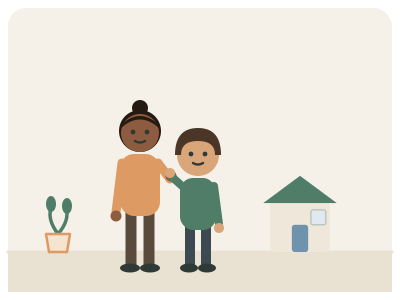
A child is going to get their hair cut.
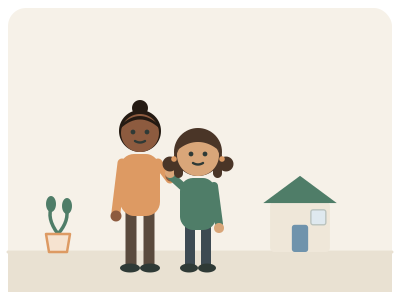
Maya is going to get a haircut.
Example, using the name Maya
Step 1 of 7
What is happening?
I am going to get my hair cut.
Get the free Haircut pack
The printable version: the story, the step cards, the first–then board, the strategy cards and the parent guide, on A4.
For grown-ups: how to use this
Two or three minutes of reading. The child's part is on the page above — this part is for you.
Before the haircut
- Go through it together on a calm day, not in the car park five minutes before.
- Two or three short goes over a few days works better than one long one.
- Let your child stop whenever they want to. Making them sit through it again turns the resource itself into something to resist.
- Ring the salon first. Ask for a quiet time of day, and say what helps — most will happily book you in when it is empty.
- Pack whatever you chose above: headphones, the comfort item, something to watch.
During
- Say less than feels natural. A running commentary is more to process, not less.
- Show the card instead of explaining it. Point at the step you are on.
- Offer one or two choices, not an open question. “Headphones or hold my hand?” is easier than “What do you want?”
- Take the break the moment it is asked for. A break that arrives late teaches that asking does not work.
- Name what you can see — “that sounds loud” — rather than correcting it. Agreeing costs nothing and it is usually true.
If your child refuses
- Refusing is information, not misbehaviour. Something about it is not workable yet.
- Try a smaller step: sitting in the chair with no cut, or watching a sibling go first, or just going in and leaving again.
- A haircut done in two short sittings still counts as a haircut.
- Some children manage clippers but not scissors, or the back but not the fringe. Getting part of it done is a real result.
- Home haircuts, dry cuts, or a salon that will come to you are all reasonable alternatives, not a failure to do it properly.
If it does not work
Visual supports help many children and do not work for every child. This one may make a haircut more predictable; it cannot promise that a haircut will be calm, and a child who becomes distressed is not doing it wrong.
If haircuts are consistently distressing, or the difficulty extends to other everyday care like washing hair, teeth or clothing, an occupational therapist or your GP is a reasonable next conversation. This resource is educational material, not therapy or medical advice.
Who this pack is for
Families preparing a child for a haircut, and the adults who go with them — parents, carers, teachers and support workers.
It supports: Knowing what happens during a haircut, naming how it might feel, and having something concrete to do about it.
What is included
- A step-by-step walk-through: what happens, how it might feel, what to do, a rehearsal, and what comes afterwards
- Six feelings to choose from, including feeling okay about it
- Ten things a child can actually do — headphones, a break, “Stop, please”, looking away
- A Now → Next board showing what happens after the haircut
- A first–then board and cut-out step cards
- Personalisation: your child's name, the boy or girl character, and what happens afterwards
- A practical guide for the adult using it
Formats and cost
- An interactive walk-through on a phone, tablet or computer
- A printable A4 version, with the parent guide at readable size
- Printable PDF, 12 A4 pages, with a boy or girl character
- Free to use online, to print and to download.
Good to know
Visual supports help many children and do not work for every child. This may make a haircut more predictable; it cannot promise that a haircut will be calm. Every child responds differently — use, skip or adapt any step. This is an educational resource, not therapy or medical advice.