Does someone need more space? — print pack
Print, cut, and talk about it together. · Ages 5–10 · Roo Bloom
How to use these pages
- Print on A4, single sided, at 100% — not “fit to page”.
- Cut along the dashed lines to make the cards.
- Nothing here is marked. The talking is the activity.
- The last page is for you, not for the wall.
Look: What can you see? · Think: What might it mean? · Check: Is there another clue? · Choose: What could you do?
Someone might want more room when…
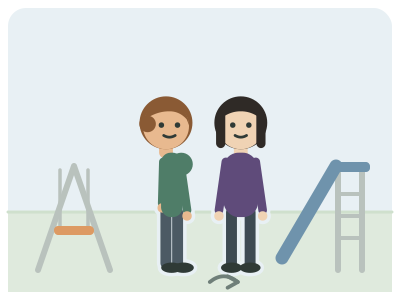 Mei took a small step backwards.
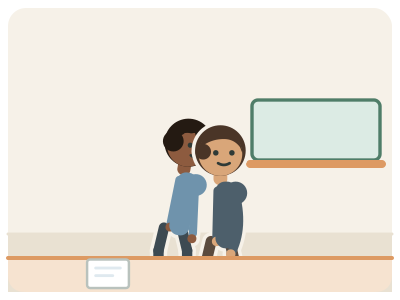 Sam turned his shoulder away from Nia.
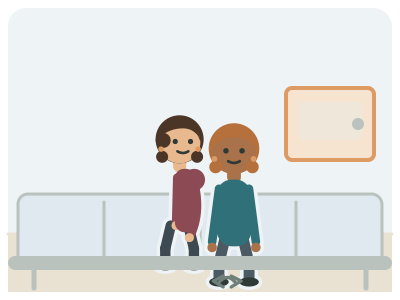
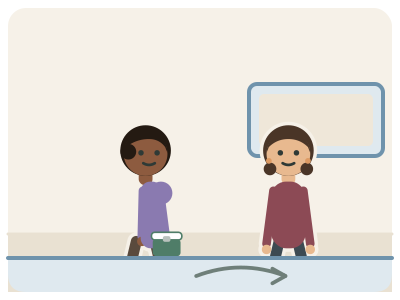 Jo moved along the bench.
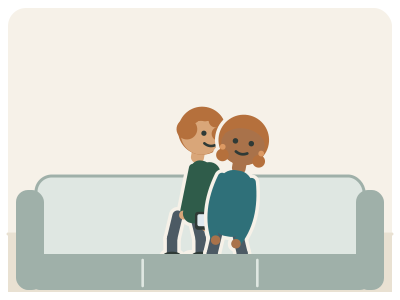 Tabi leaned back into the couch.
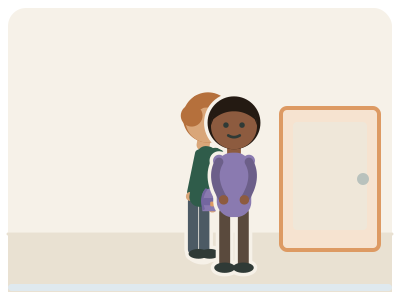 Ravi pulled his arms in close.
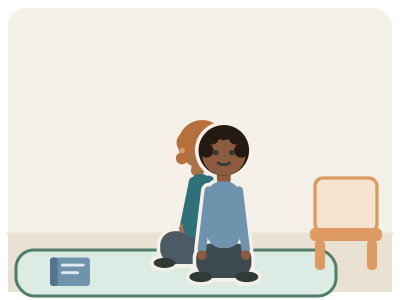 Nia's body went stiff and still.
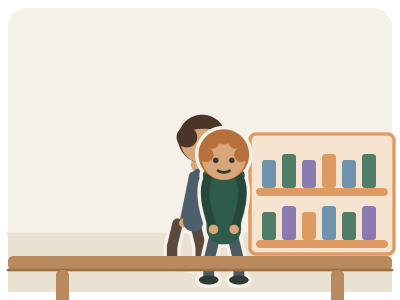 Kit's head went down and her shoulders came up.
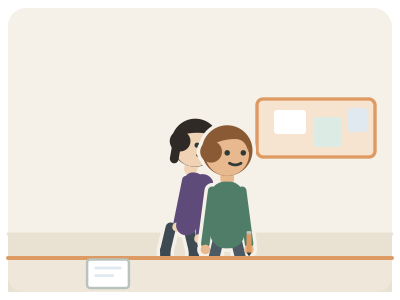 Arlo kept looking away while Mei talked.
 Tabi moved about a lot in her seat.
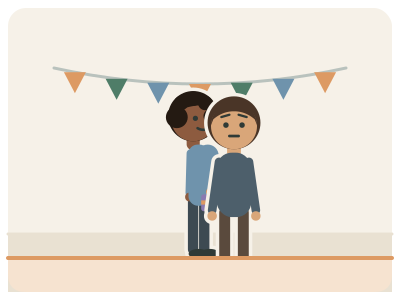 Sam's face looked unsure.
One clue is an idea. Two clues are a better guess.
Situation cards
Cut these out. Read one, and talk about what you notice.
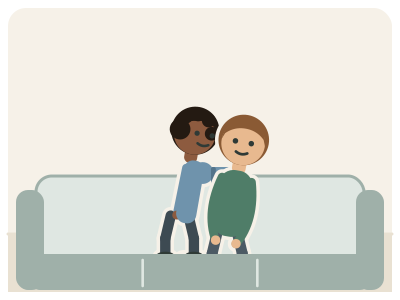
Arlo leaned back as Nia moved in with the book.
What clue did you notice?
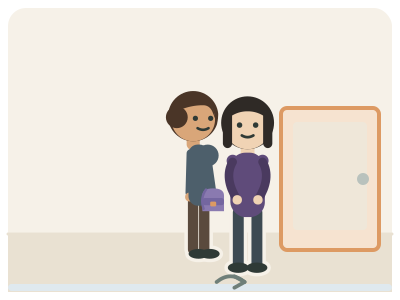
Mei took a small step back in the line.
What clue did you notice?
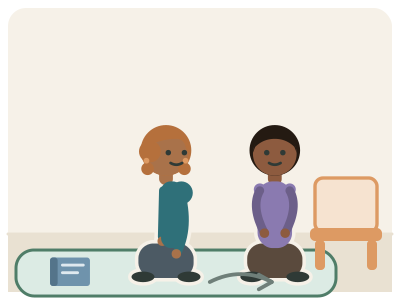
Ravi shuffled along the mat, away from Tabi.
What clue did you notice?
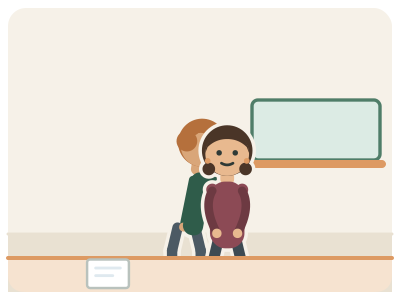
Jo pulled her arms in close at the desk.
What clue did you notice?
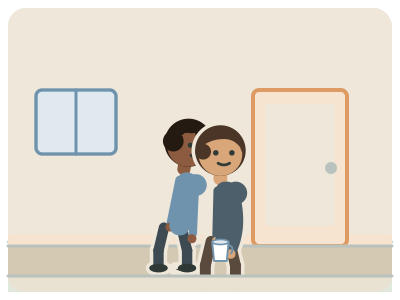
Sam turned his shoulder away as Nia leaned in.
What clue did you notice?
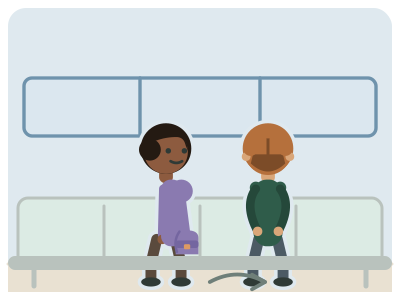
Kit moved along the seat and turned towards the window.
What clue did you notice?
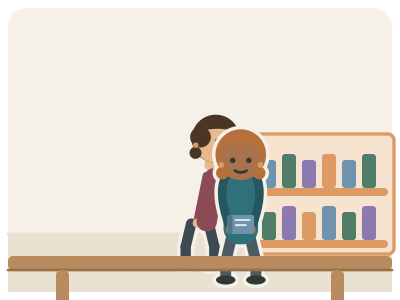
Tabi put her head down and pulled her arms in.
What clue did you notice?
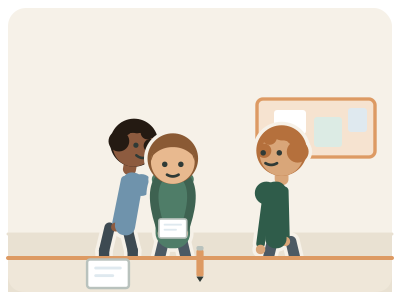
Nia reached across Arlo, who pulled his arms in.
What clue did you notice?
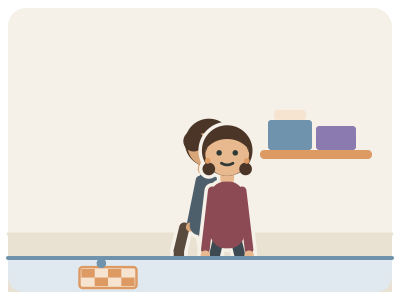
Jo's body went still and stiff beside Sam.
What clue did you notice?
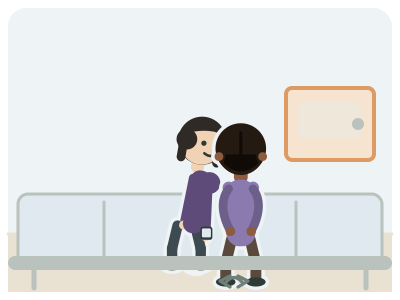
Ravi shifted about, then turned away from Mei.
What clue did you notice?
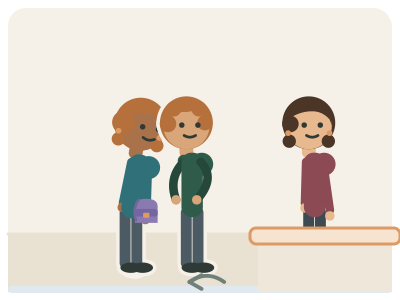
Kit stepped back and stood well away from Jo.
What clue did you notice?
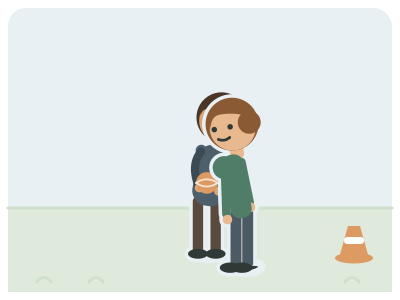
Arlo stood very close while Sam leaned away.
What clue did you notice?
What could I do?
Cut these out and keep them somewhere handy.
What could I do?
- Move along the couch a bit
- Ask if he'd like more room
- Move your elbow back to your side
- Sit back up and stop leaning
- Move your chair back a little
- Pass the pencil along instead of reaching
- Move your arm back to your side
- Take a step to the side
- Take a small step back anyway
- Wait a moment before talking again
- Move over towards your own door
- Sit on the other side instead
Words I can say
Cut this strip off and stick it up somewhere.
“Would you like a bit more room?”
Somebody beside you has pulled their arms in.
“Can I sit here?”
There's a gap on the bench and you can't tell if it's free.
“Do you want me to move over?”
You've sat down close and you're not sure how it landed.
“Do you want me to stop?”
A game has got faster or rougher than it started.
“No, thank you.”
Somebody offers something you don't want — a hug, a tickle.
“I'd like a bit of room, please.”
Elbows keep bumping at the table.
“I don't want a tickle right now.”
Somebody is still playing and you've had enough.
“I don't want a hug right now.”
Arms come out at the door and you'd rather not.
“Can you lean the other way?”
Somebody is leaning on you in the back seat.
Clue detective
Fill this in together after something real happens.
What did I notice?
What might it mean?
Was there another clue?
What could I do?
For grown-ups
This page is not for the wall. It is the bit that keeps the rest of the pack honest.
Why this doesn't hand over a rule
A gesture is not proof. Arms pulled in can mean a squashy spot on the mat, a cold morning, a jumper on a lap, or nothing anybody could name — and the same arms on the same child mean something different on a Monday and a Friday. Everything a child reads in this topic is written as might, could and maybe, because from the outside that is honestly as far as anybody gets.
The same clue reads differently on different people. One child leans in when she is happy and another goes very still; one steps back to think and another steps back because the hall is loud. A child handed a lookup table will use it confidently on the person it does not fit, and that is worse than having no table at all.
So the skill practised here is not decoding — it is asking. “Would you like a bit more room?” takes two seconds and comes back with an actual answer, and it goes on working with people no chart covers. That is also why a whole set of these situations runs the other way, on saying what you need yourself: a child who can only read other people has been given half a skill.
This topic deliberately does not teach eye contact, still bodies or quiet hands. Those are about how a child appears to somebody watching, not about whether anybody's room was respected. An autistic child can look at the floor, rock, and talk with their hands the whole time and still be careful with the people around them, and a child sitting perfectly still can crowd somebody all afternoon. We practise the thing that actually protects people, and leave your child's body alone.
What not to push
- Eye contact. Not while listening, not while apologising, not while asking for room. Looking away costs nobody anything, and a child working hard on a face has less attention left for the actual conversation.
- Smiling, or arranging a face at all. A flat face is not a message, and a child asked to add one has been asked to perform rather than to notice.
- Stillness. Rocking, fidgeting, pacing and hands that move are not clues about anybody's room, and nothing in this topic treats them as something to fix.
- Hugs, tickles, a hand on the shoulder, a kiss goodbye. Theirs to decline every time, relatives included, and a no does not need a swap offered in its place — no wave owed, no high five, no hug next time to make up for this one. The no only lands if you back it out loud, in the room, while everybody is still standing there.
- A reason. “No thank you” is finished. A child asked to explain a no has been taught that a good enough reason would have changed the answer.
Trying it together
- Say your own room out loud. “I need a bit of space while I'm carrying this.” Children pick a sentence up from hearing it far faster than from being told it.
- Play “still comfy?” on the couch: sit down, shuffle a little closer, ask, and keep going until somebody says stop. It makes an invisible thing visible in about a minute.
- Ask before a hug at home for a week — “hug?” — and take the no without a face. Home is where they find out whether you meant it.
- In a queue at the shops, ask afterwards what they noticed about the gaps between people. “I didn't notice anything” is a fine answer.
- When somebody in a film moves away from somebody else, pause it and ask what else that could have meant.
The three things to remember
- One clue is an idea, not an answer.
- Two clues together are a better guess.
- You can always just ask.
What each card is about
- 1. Leaning away can mean: I'd like more room.
- 2. When someone steps back, leaving the gap helps. — Lines are a good place to spot this, because the gap is easy to see from behind.
- 3. A gap someone makes is usually a gap they want.
- 4. Arms coming in can mean cold, or wanting room. — The cold answer is honoured on purpose. Children need to see a clue having two fair readings.
- 5. A turned shoulder can mean: a bit more room.
- 6. Two clues together make a better guess.
- 7. Curling up small can mean wanting more room.
- 8. Pass things along instead of reaching over people. — Three figures here, and only one of them has anybody close. That is the thing worth pointing at.
- 9. A body going stiff might have run out of room.
- 10. Moving about on its own tells us very little. — Worth saying out loud: moving about is not a problem, and this card never treats it as one.
- 11. Different people like different amounts of room. — Some children keep a metre of room and some keep none. Both are ordinary.
- 12. Notice the gap between you and the other person.